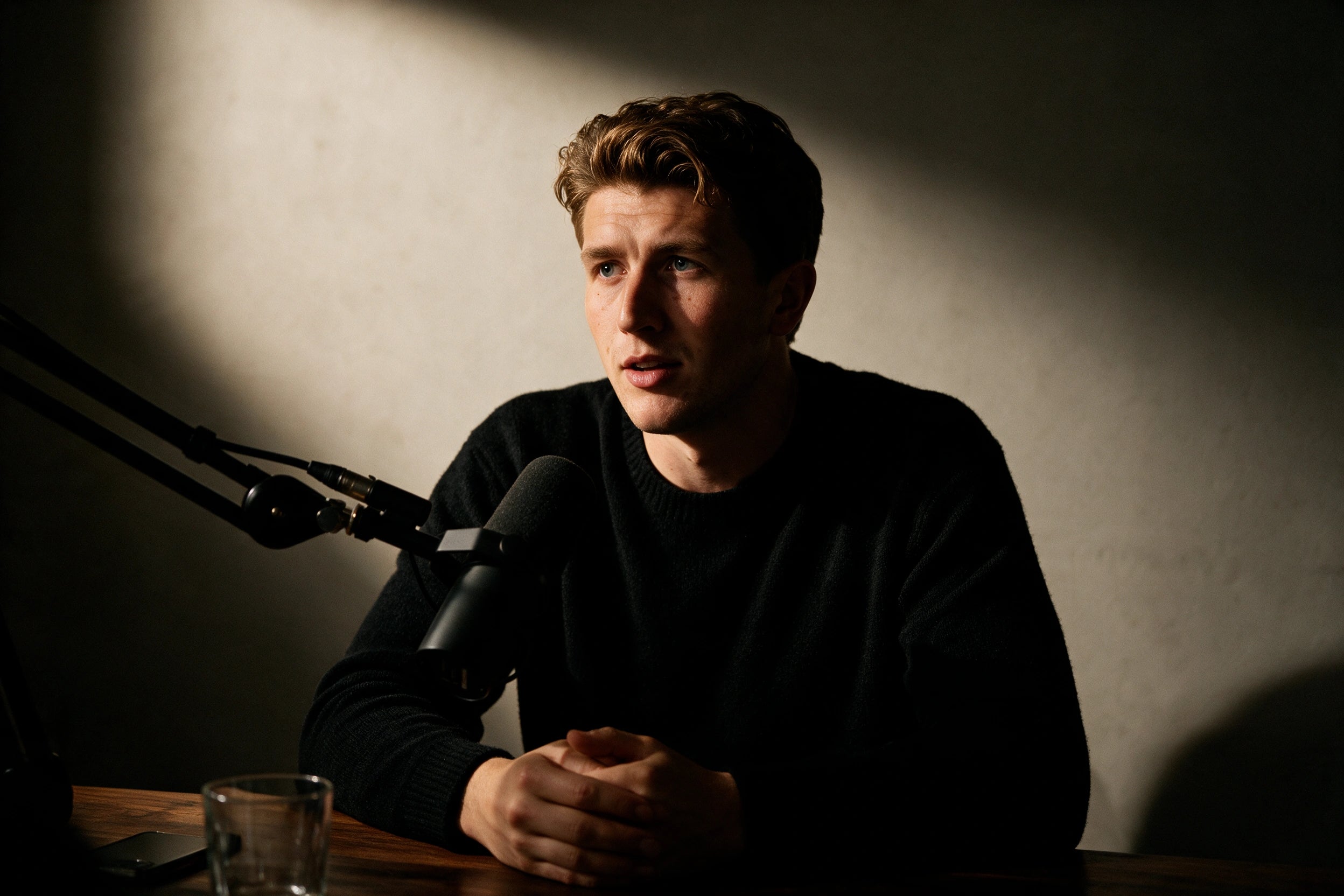



Ottawa Charge player Ronja Savolainen on health, recovery and optimisation
I've been interested in health for as long as I can remember — not in the obsessive, biohacker-spreadsheet way people sometimes mean when they say that, but in the way that makes you read things you didn't have to read and change habits before anyone told you to.
Sleep was always part of that. Not as a problem I was trying to fix, but as something I genuinely found fascinating. The architecture of it. The hormonal choreography. The fact that the body is running an extraordinarily complex repair operation every night and most people treat it as dead time.
That interest eventually led me to light.
Not immediately. It was gradual — following one thread of circadian research into another, reading about melanopsin receptors, about how the eye contains a third type of photoreceptor whose only job is to detect short-wavelength light and report to the brain's master clock.
About how that system evolved across hundreds of thousands of years of sunrises and sunsets, and how completely modern life had disrupted it without anyone quite noticing.
The more I understood the mechanism, the more I started paying attention to my own evenings. The laptop I kept open until late. The overhead lights. The phone.
None of it felt significant in the moment — it was just an evening. But what I was effectively doing, every night, was sending my brain a clear biological signal that it was still the middle of the afternoon.

I bought a pair of blue-light blocking glasses. Not from any particular conviction — more as an experiment, the way you try anything when you've become genuinely curious about something.
What I didn't expect was how much I liked the simplicity of it.
There was no protocol. No timing to optimize, no dose to get right, no dependency to worry about. You put them on an hour or two before bed and went about your evening. That was the whole thing.
And the effect — falling asleep more easily, waking up feeling like the night had actually done something — was noticeable enough that it became a habit without me deciding to make it one.
The glasses themselves, though, were another matter.
I'm Swedish. I care about how things look — not in a vain way, but in the way that people who grew up around good design develop an instinct for when something is made carelessly. And almost everything in this category was made carelessly.
The frames were either clinical and utilitarian, the kind of thing you'd wear in a laboratory, or they were fast-fashion eyewear with a coloured tint that blocked almost nothing useful. There was no middle ground. Nothing that fit into an ordinary life without announcing itself.
For something you're going to wear every evening, in your home, that matters.