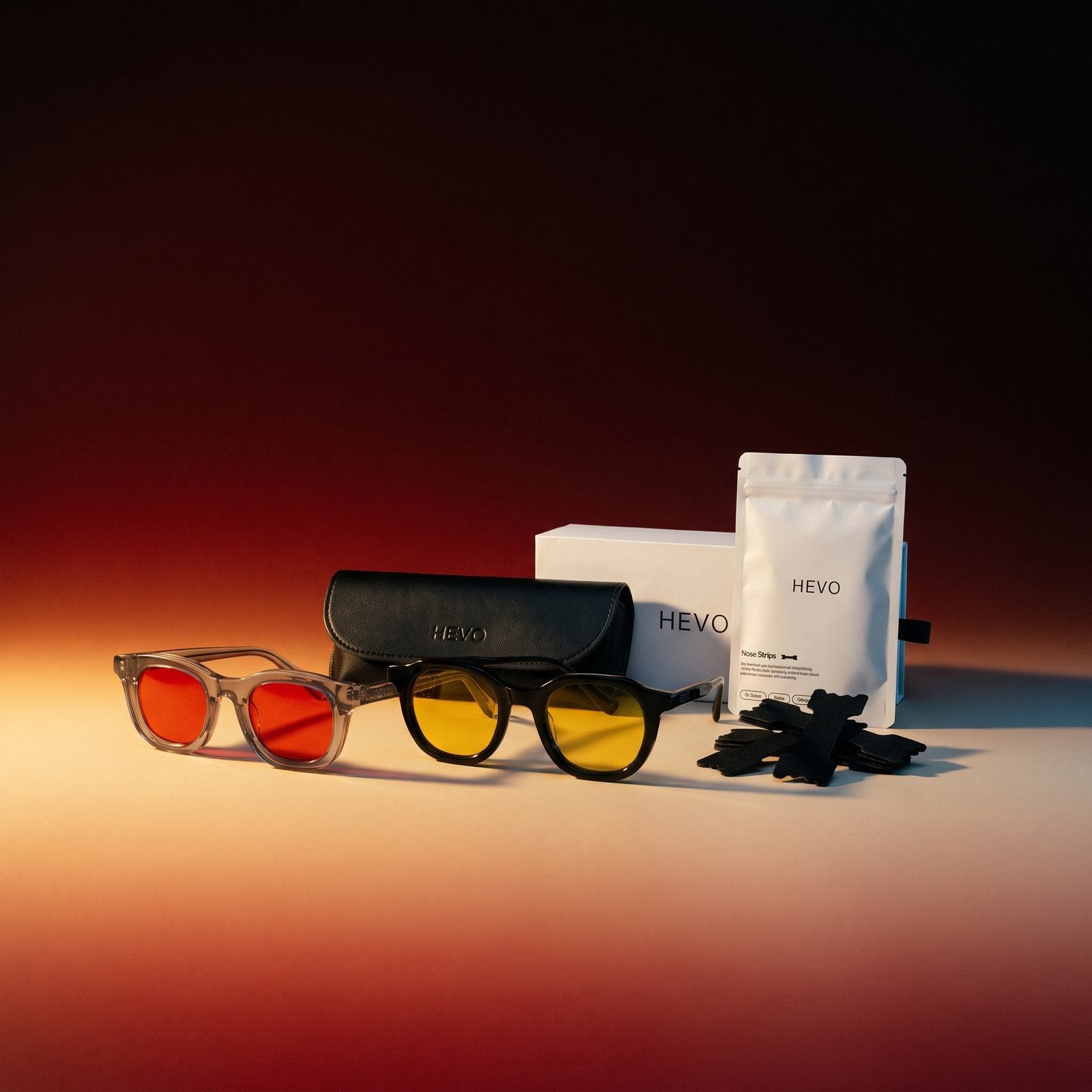
EVENING STARTS AT THE EYE
There is an exact moment every evening when the body is ready to switch. The problem is that screens and indoor lighting delay it. Blue and green-adjacent wavelengths hit the retina and keep the brain in daytime mode — melatonin is suppressed, cortical arousal stays elevated and the autonomic nervous system resists the parasympathetic shift. Sleep is postponed. This is not a habit issue. It is physiology.
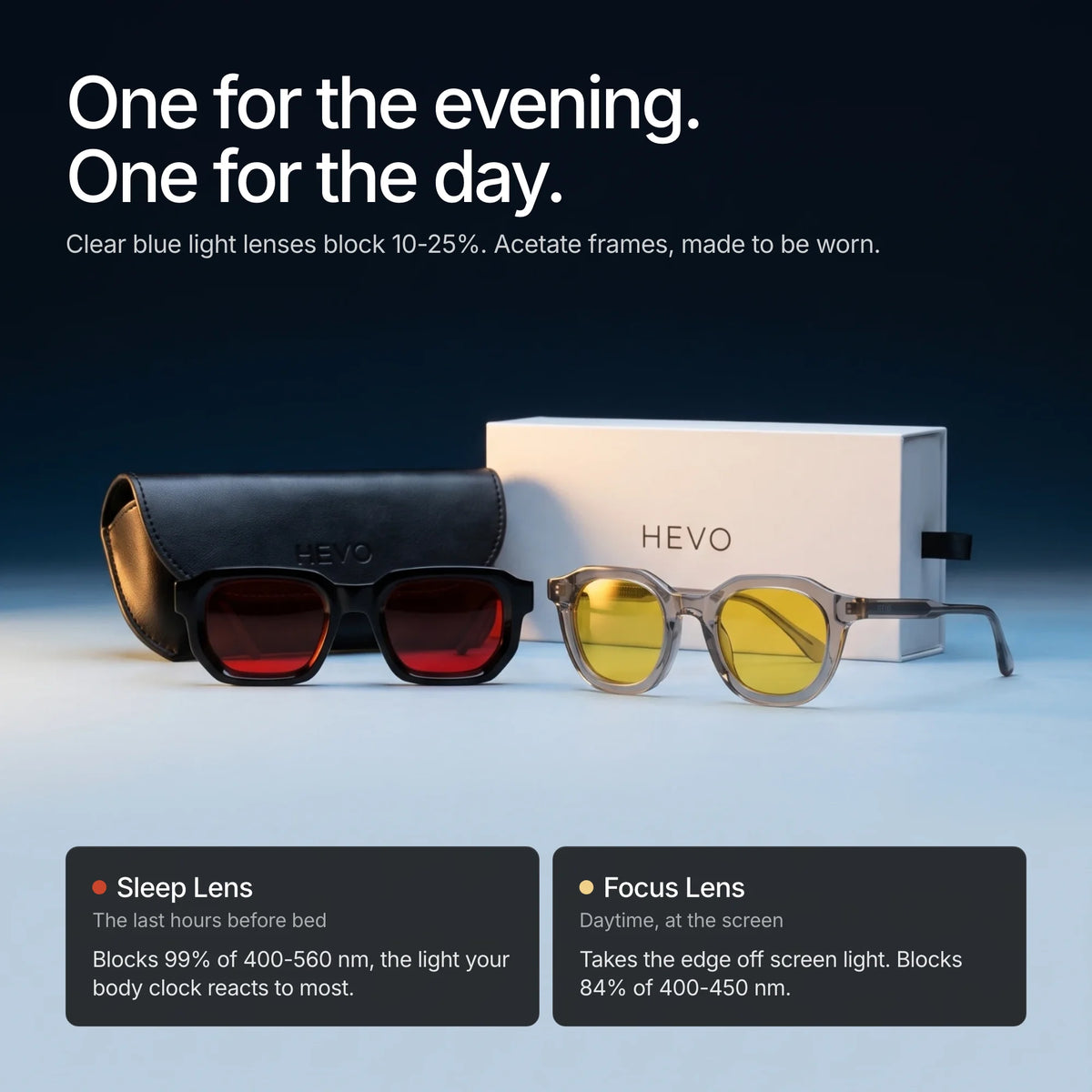
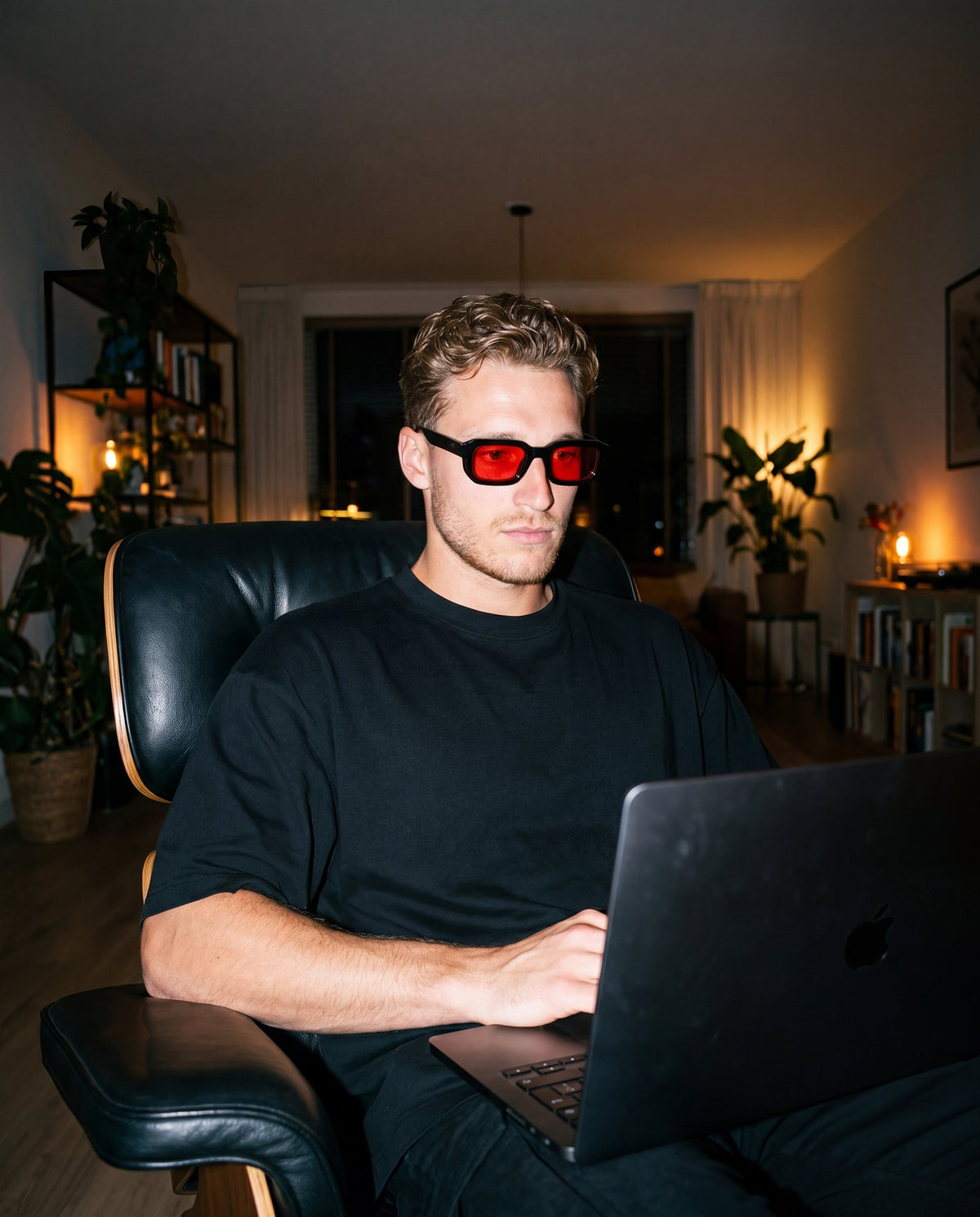
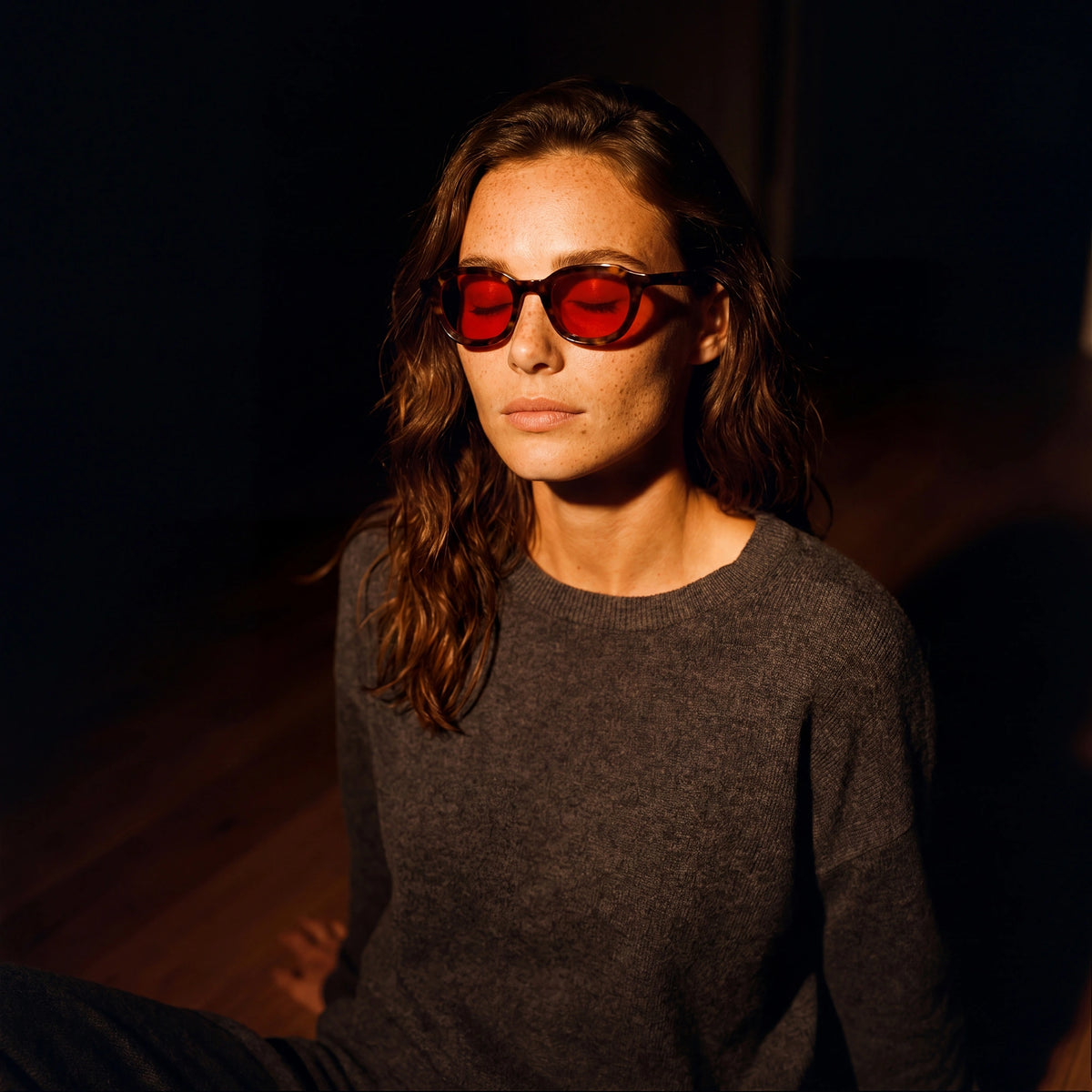
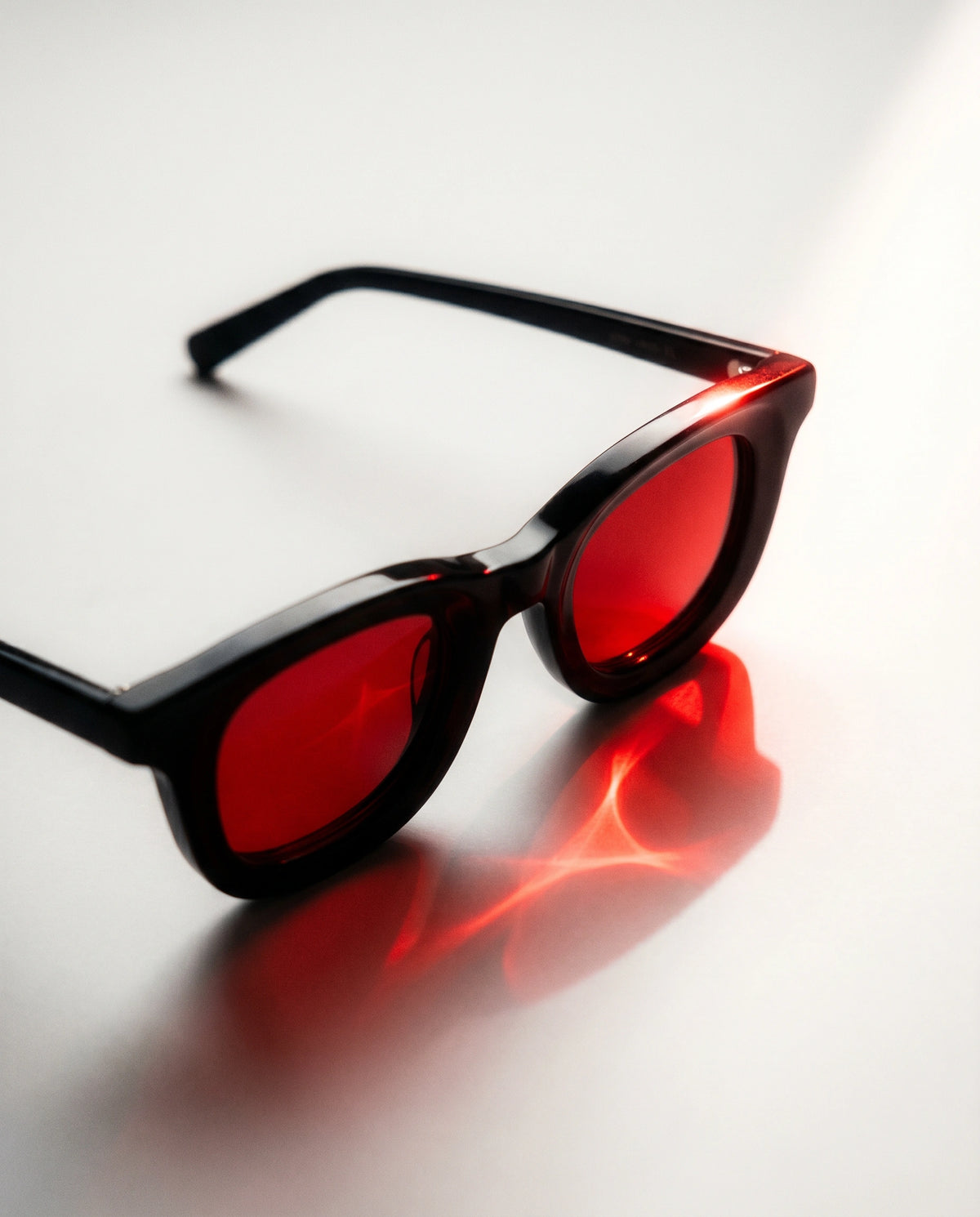
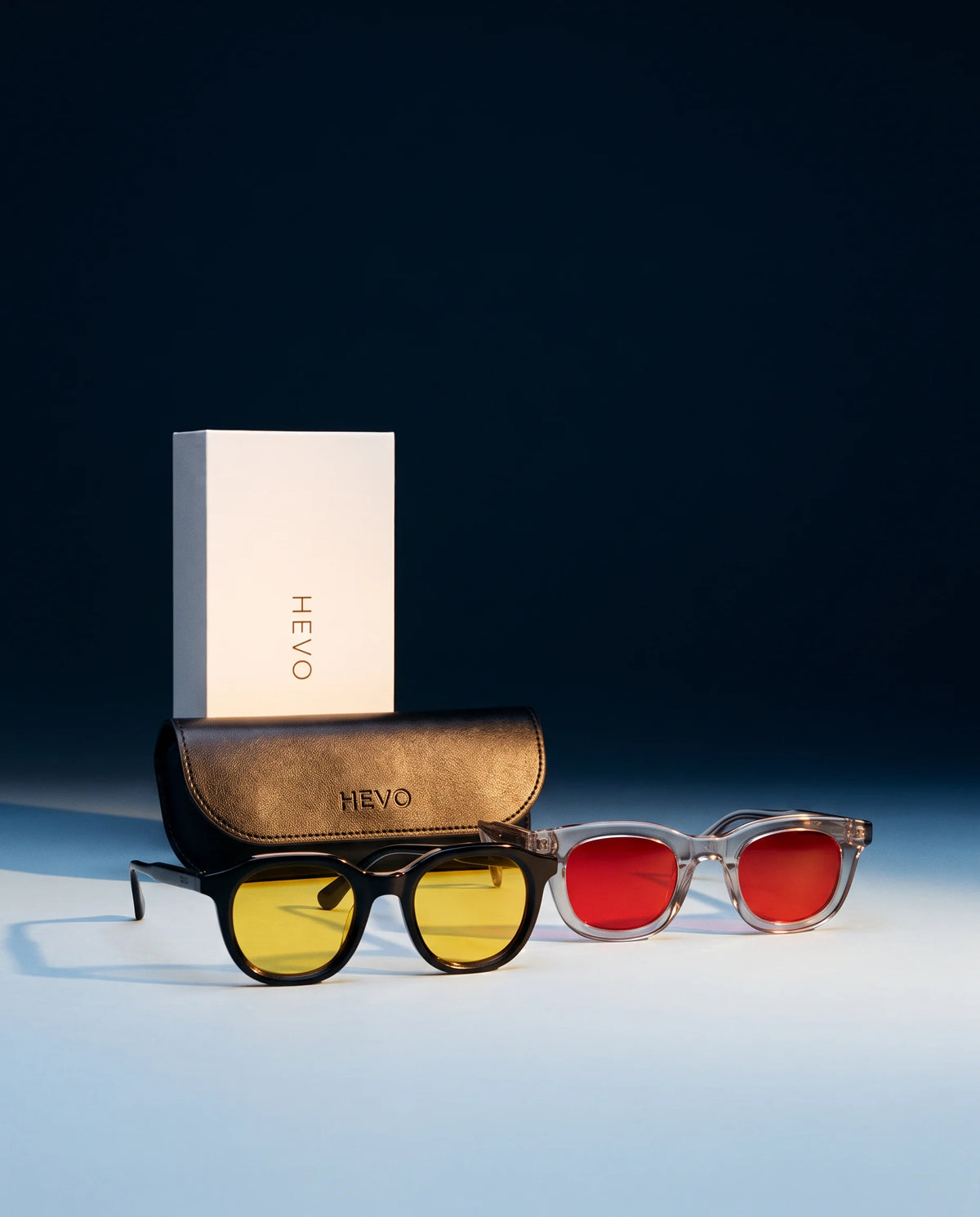
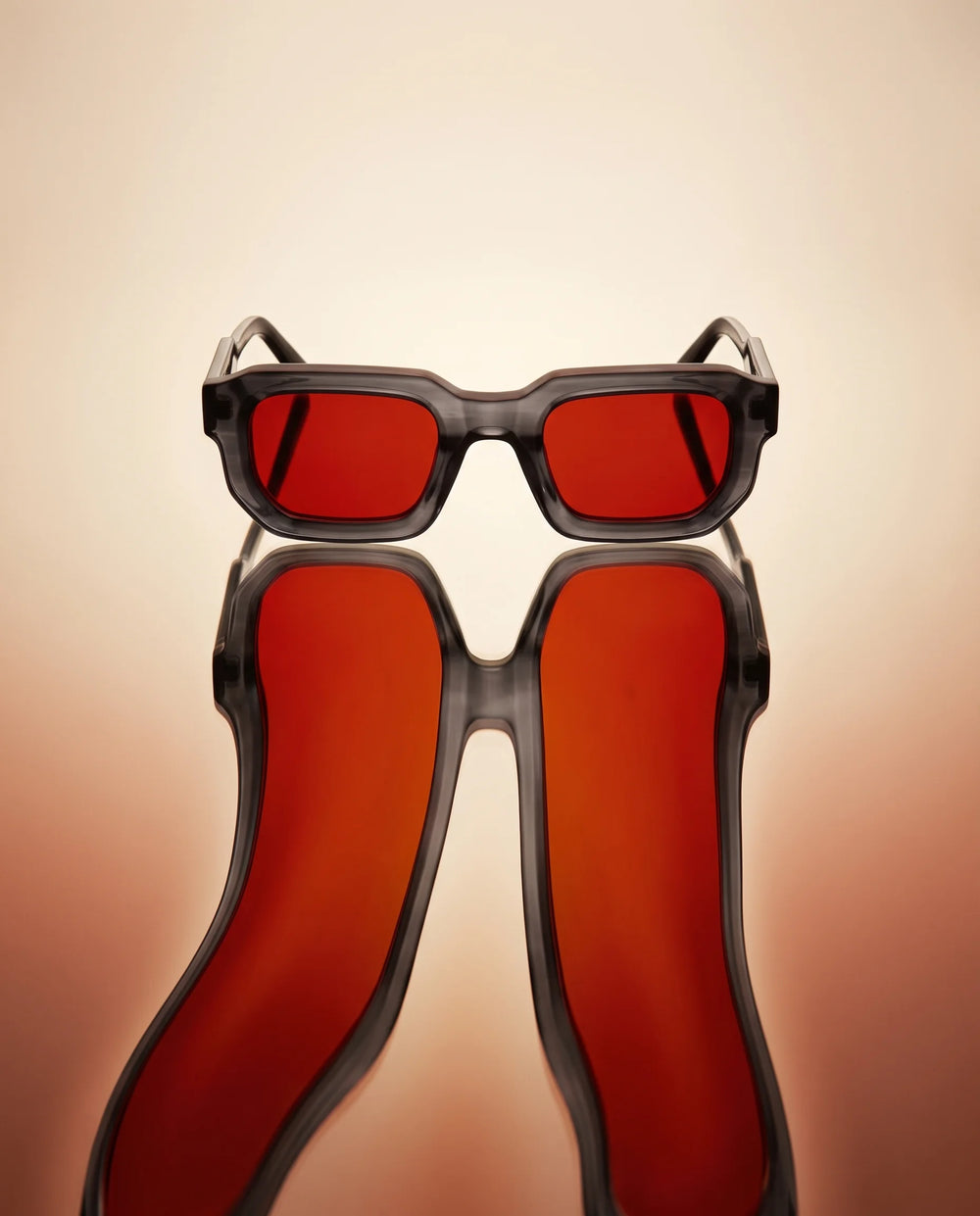
HEVO manages the signal at the source. The lens absorbs 99% of blue light and blocks 100% of UV within tested ranges, with strong attenuation of transmission between 500 and 560 nanometres. That is sufficient to give the brain the night signal it needs: melanopic stimulation drops, wakefulness-driving input is removed and the warmer wavelengths that remain allow normal vision without interfering with wind-down.
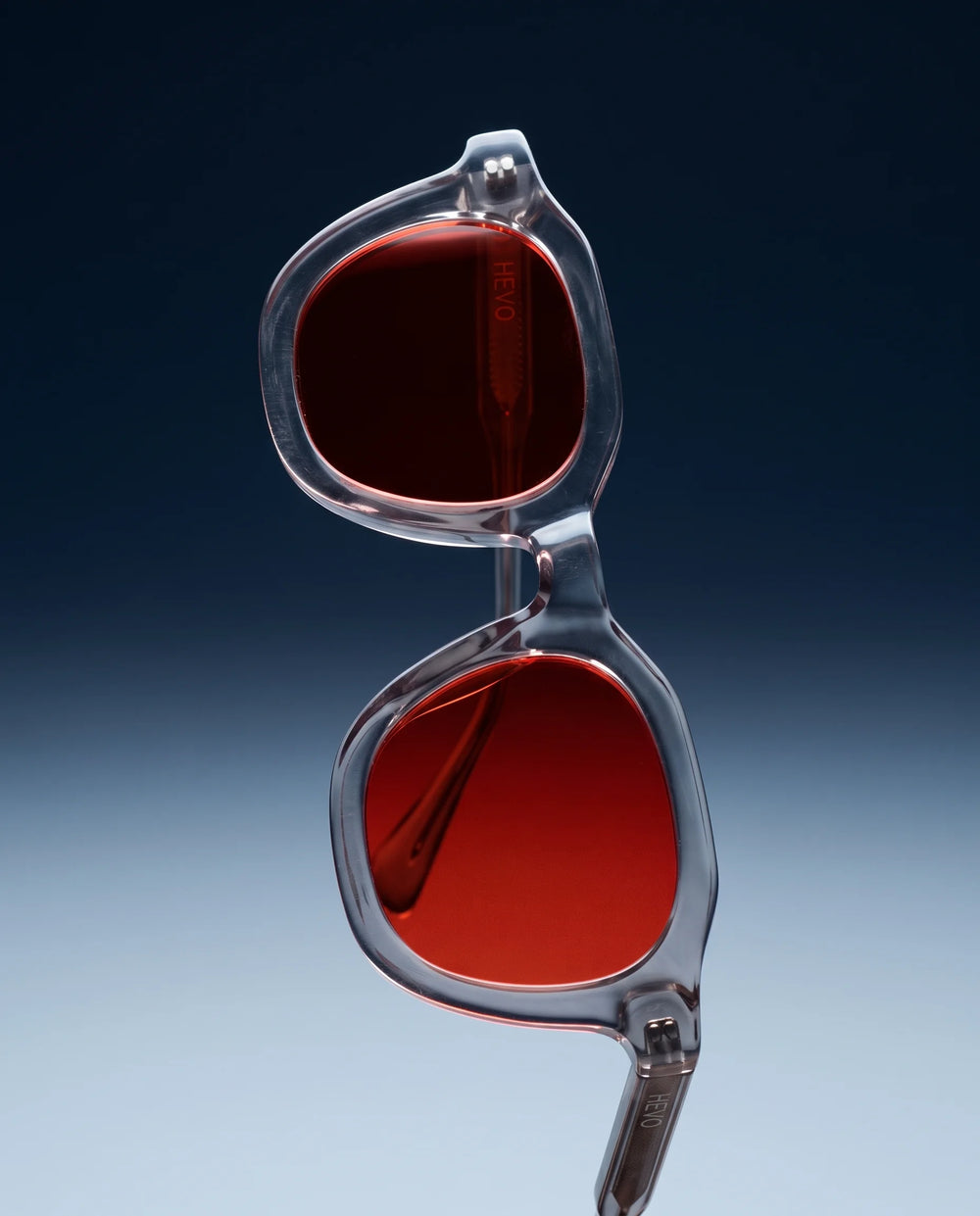
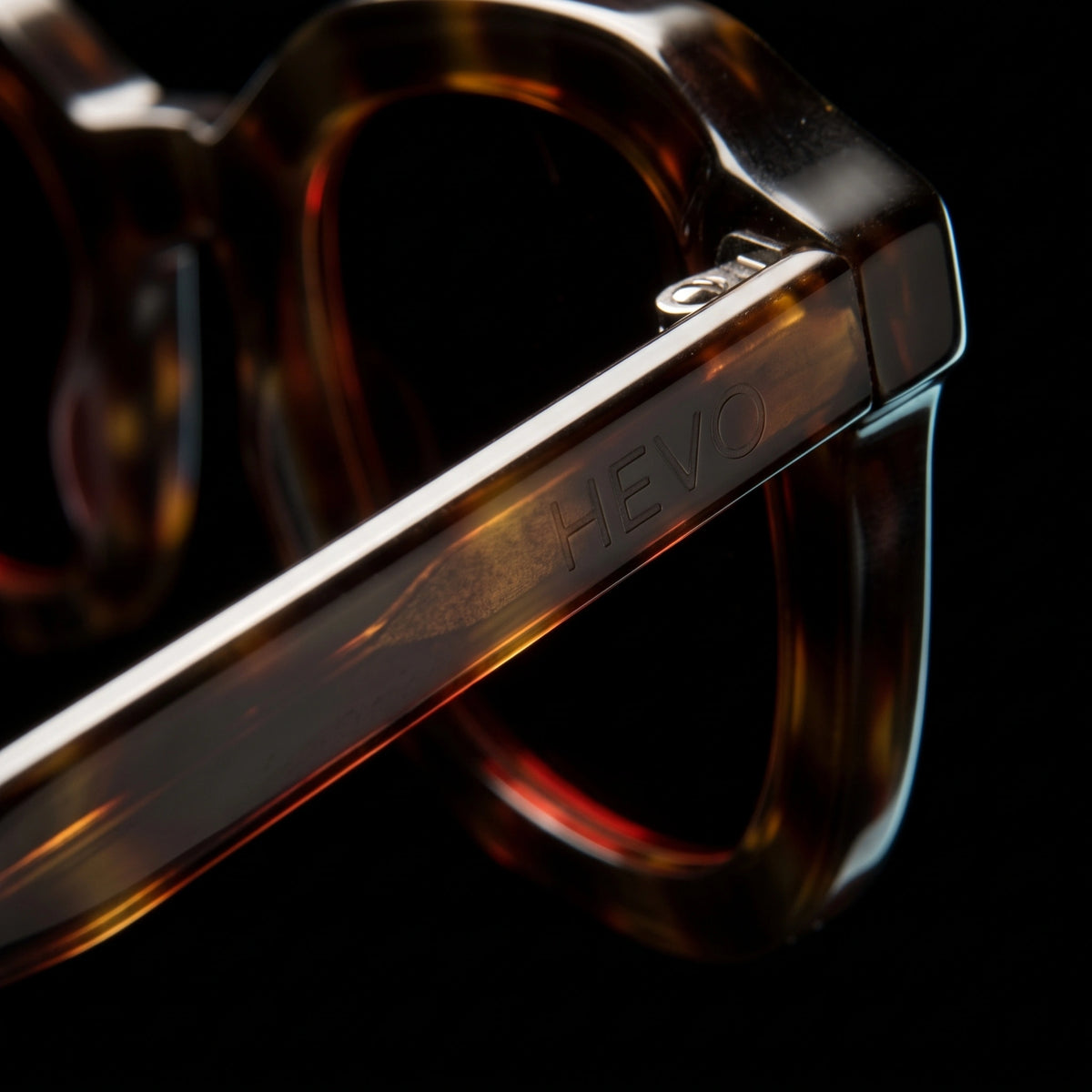
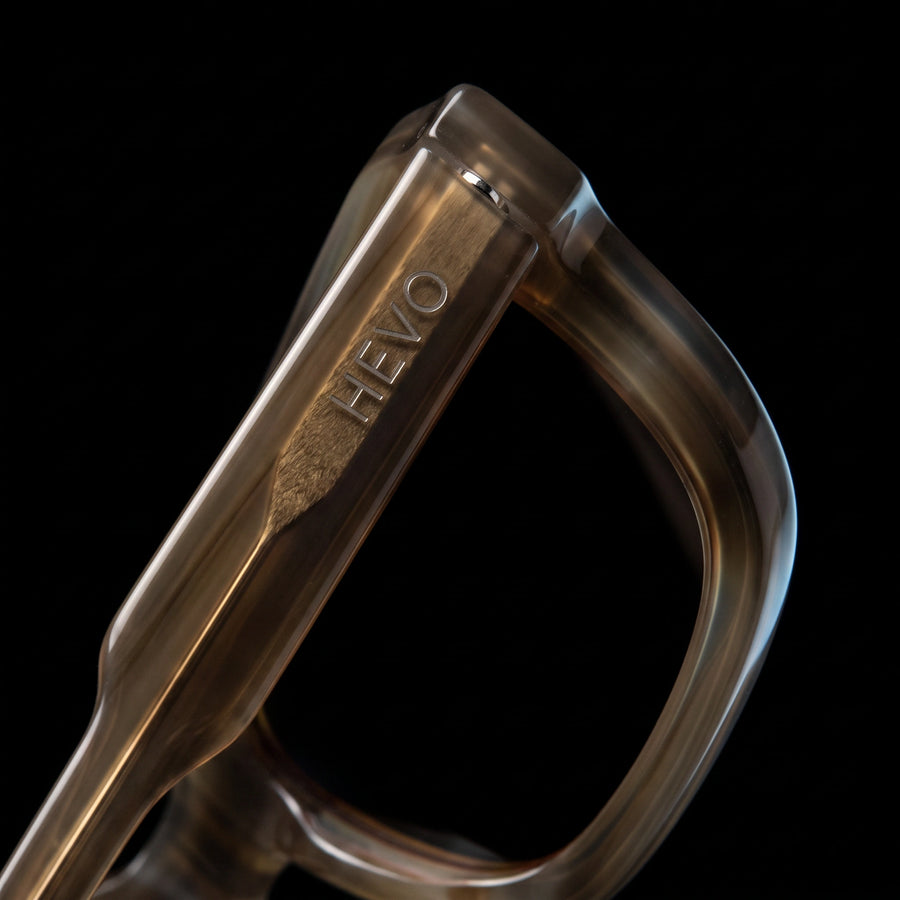
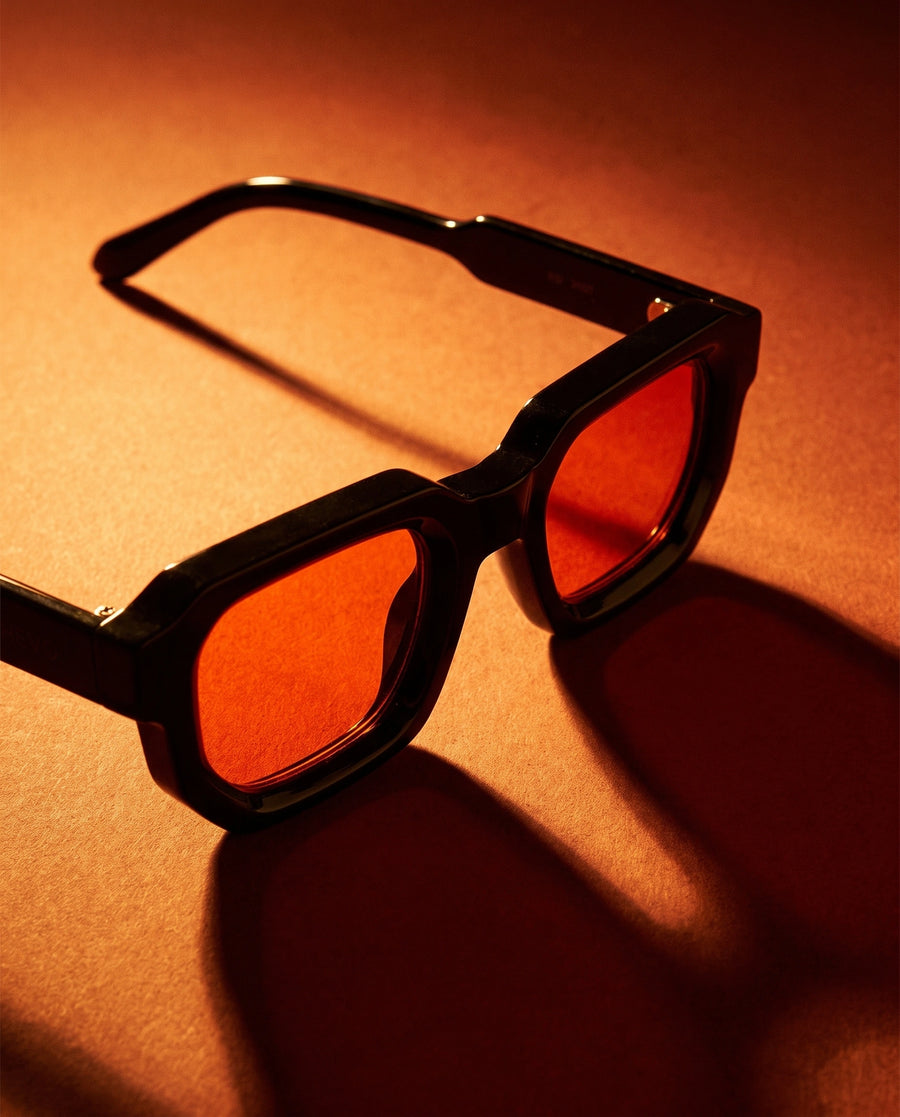
The frame is built for consistent performance in evening environments. The full-size lenses reduce peripheral light entry from mixed indoor sources. Acetate temples hold alignment stable during extended wear. Optical-grade polycarbonate at 2.0 mm delivers uniform spectral blocking across the entire visual field — not just straight ahead. Filtering values are laboratory verified and the glasses meet international optical standards.
Put them on from dusk to bedtime. That is all it takes to stop working against your own recovery.
MELATONIN DOES NOT RELEASE ON ITS OWN
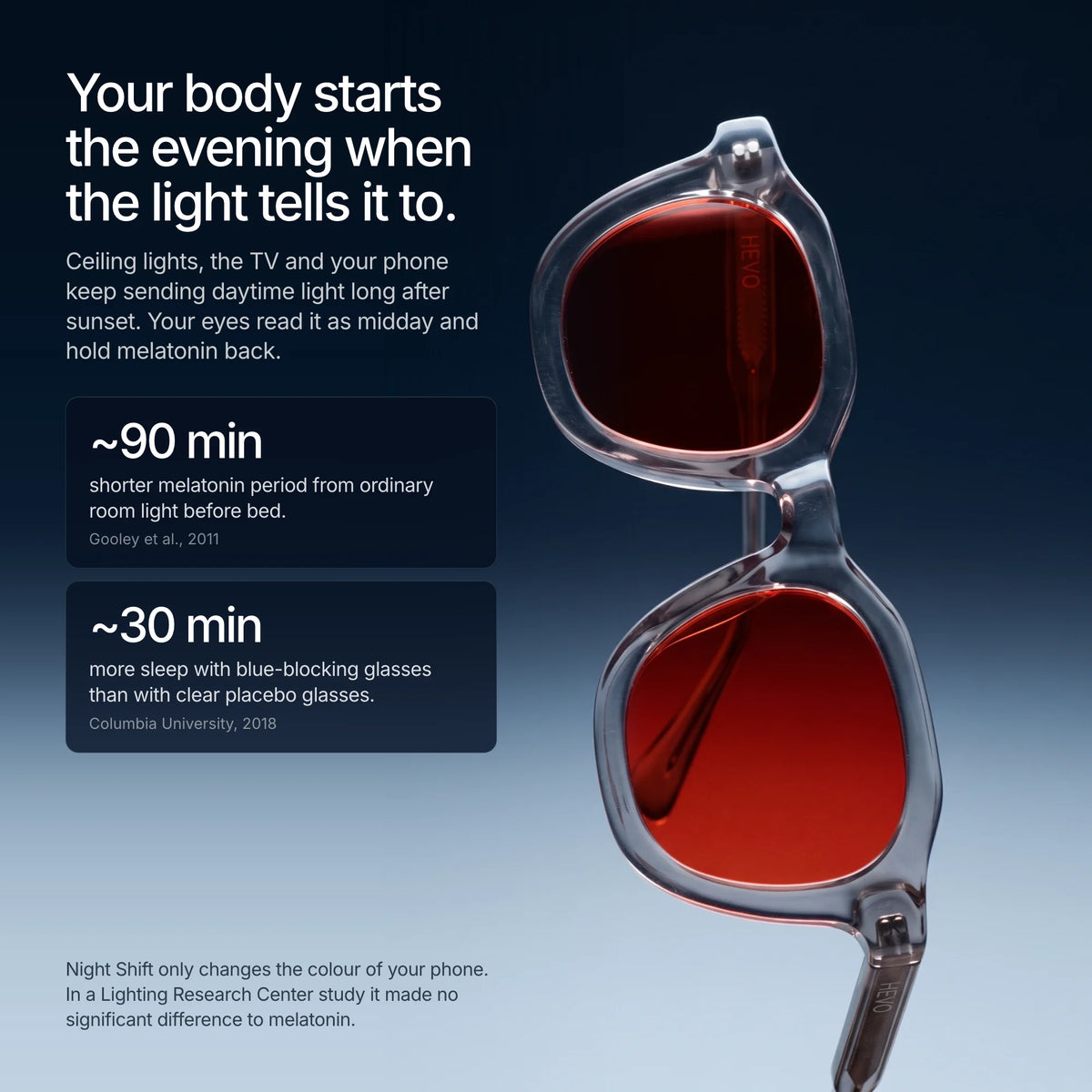
The body produces melatonin when the eye's photoreceptors stop signalling daylight. The cells that control this — intrinsically photosensitive retinal ganglion cells — respond primarily to blue and green-adjacent light and signal directly to the suprachiasmatic nucleus. As long as those wavelengths are active, release is suppressed. Screens and indoor LED lighting are strong enough to hold the system in daytime mode well into the evening. Repeated over time, this strains nocturnal recovery and destabilises hormonal and metabolic regulation.
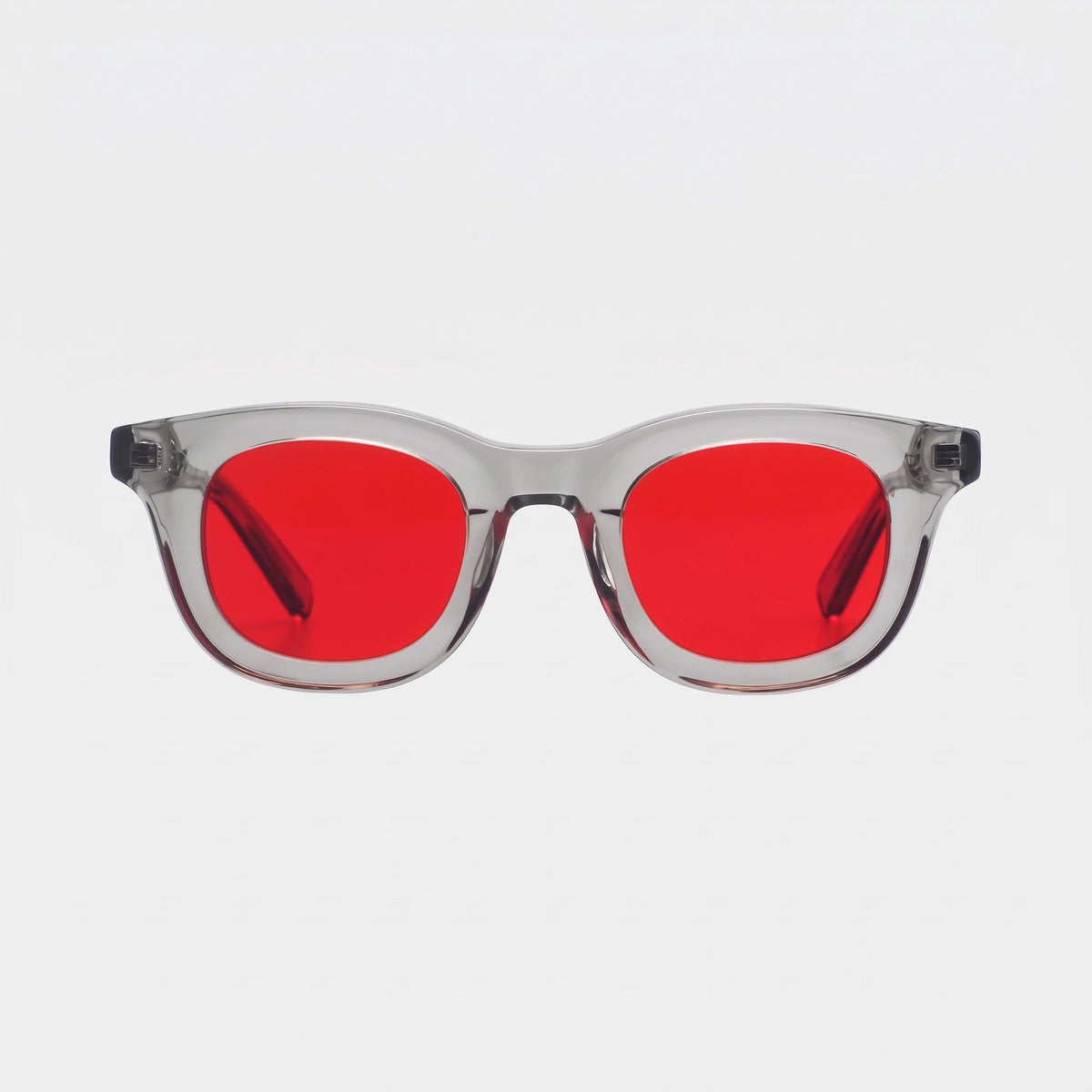
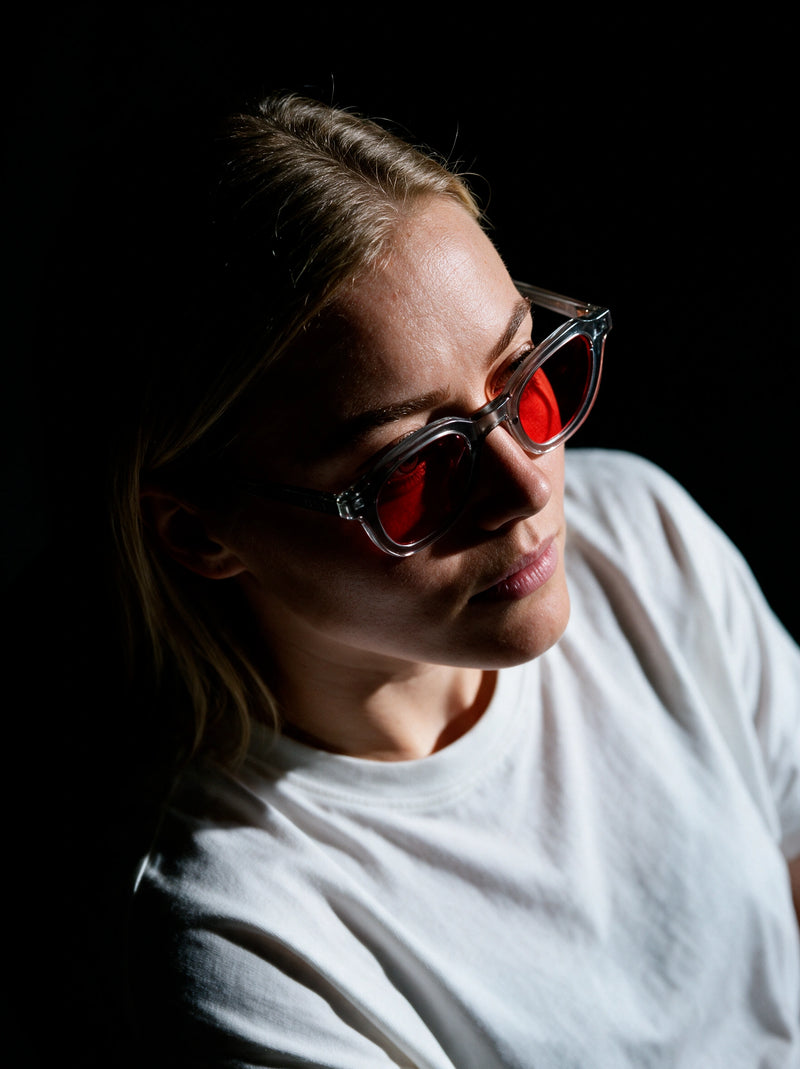
HEVO breaks that signal at the eye. The red lens absorbs 99% of blue light and strongly attenuates the adjacent green spectrum that drives circadian activation. When melanopic stimulation drops, the brain permits evening physiology — neural activation decreases, the autonomic nervous system shifts toward parasympathetic recovery and the body begins its nocturnal sequence without competing signals.
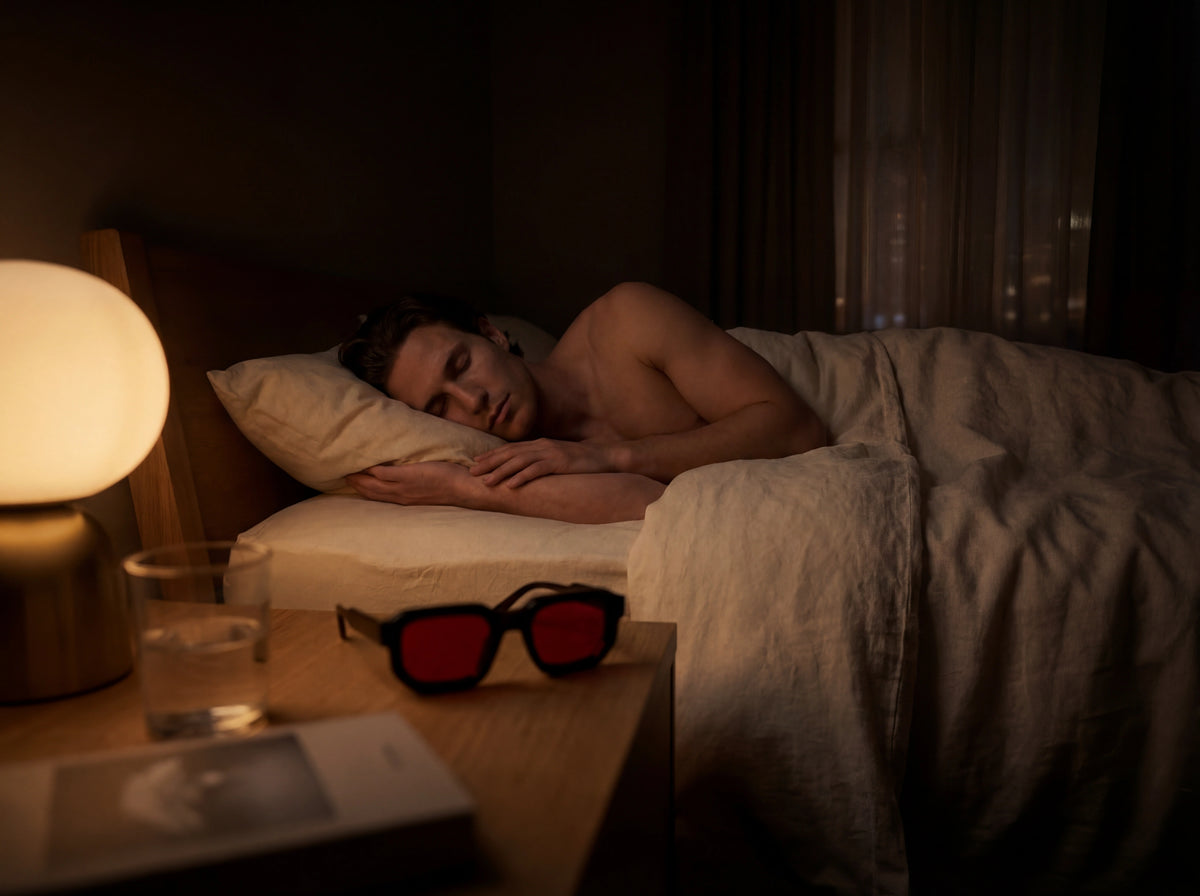
The result shows in how you fall asleep and how you wake up. Sleep onset is faster when circadian timing is not being worked against. Sleep becomes more restorative when the system does not need to compensate for delayed release. This is not a placebo effect from darker lenses — it is specificity. The lens removes the wavelengths that interfere. Everything else is left intact.
SLEEP QUALITY IS AN INPUT, NOT AN OUTCOME
Most people treat sleep as something that either happens or does not. In reality, the quality of the night is determined by what happens in the hours before it. Artificial light in the evening inhibits melatonin production, keeps cortical arousal elevated and delays the point at which the body can begin repairing tissue, regulating hormones and restoring energy. The effect is cumulative. A delayed sleep onset one night compounds the previous one. Recovery does not fail dramatically — it erodes gradually.
HEVO addresses this at the only step that is actually controllable: light exposure before sleep. Through selective filtering of the wavelengths that drive circadian activation, the lens allows melatonin release to follow its natural curve. The body receives its signal on time. Sleep onset moves earlier. Sleep goes deeper and the body's repair sequences are more fully completed.
This is not about overhauling routines. It is about removing a specific obstacle. Evening screen use does not need to stop — but its circadian cost can be eliminated. HEVO is built for that: uniform spectral blocking, stable fit and verified filtering values that actually deliver what the lens promises. Better recovery does not begin in bed. It begins at the light.